
Mark Carney and the Power of Controlled Credibility
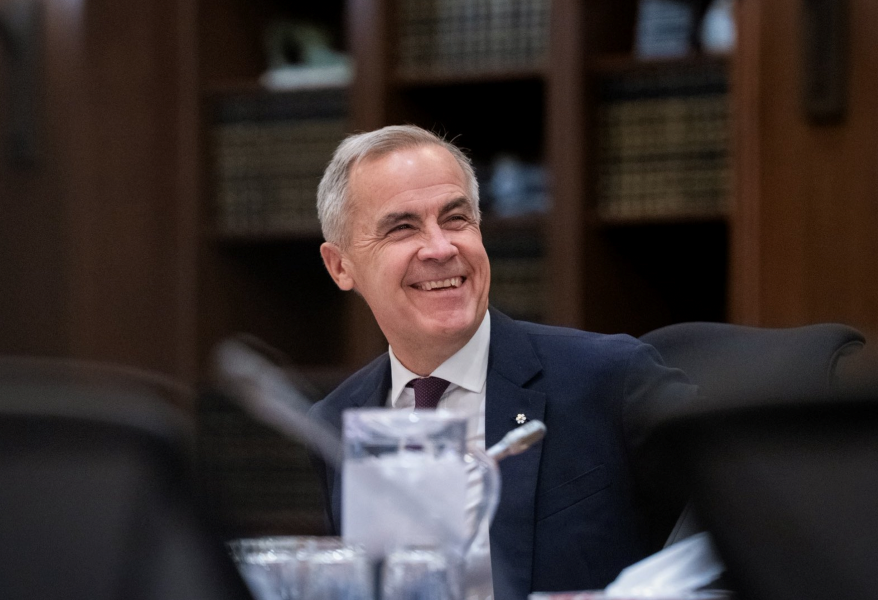
- Mark Carney, Canadian Prime Minister – Credit: Policy Magazine
When Mark Carney entered the race to lead the Liberal Party, I honestly pitied him a little.
In modern politics, we have become used to leaders who speak fast, attack sharply, dominate headlines, and perform with theatrical energy. Politics today often feels like a permanent debate stage.
Carney did not look built for that world.
His speeches were punctuated with pauses.
Too many “ums.”
A slower pace.
A reflective tone.
Compared to Justin Trudeau’s natural political rhythm or Pierre Poilievre’s rapid-fire aggression, Carney initially looked almost uncomfortable inside political theatre.
I remember wondering: “How would this calm man survive the debates? How would he survive the House of Commons, where verbal missiles are fired at the speed of lightning?”
Mark Carney Leans Into His Communication Terroir
But something interesting happened. The very traits many people thought were weaknesses gradually became part of his strength. His pauses started sounding less like uncertainty and more like deliberation. His calmness started feeling reassuring. His measured tone began to project seriousness. While others sounded like politicians trying to win arguments, Carney increasingly sounded like someone trying to solve problems. And in a world overwhelmed by noise, outrage, and permanent performance, that difference had an impact.
He did not try to become Trudeau.
He did not try to outfight Poilievre.
He did not suddenly reinvent himself into a populist firebrand.
Instead, he chose to be himself. He did not drop his origin or his identity. Rather, he turned that into his uniqueness, and probably with the help of communication experts, refined it to eliminate or reduce the “ums” and make the pauses sound more intentional and strategic.
The result is what I would call controlled credibility. That became his communication brand.
Mark Carney may not be the most charismatic politician in the traditional sense. He is not emotionally magnetic. He is not naturally combative. But he has mastered something often underestimated in leadership communication: the ability to project calm competence during uncertainty.
Refined and Transformed
And for a man not seen as a great orator, he has even given the world a memorable line: “If you’re not at the table, you’re on the menu.” That sentence worked because it transformed a complex geopolitical reality into an image ordinary people and countries could instantly understand and relate to. It was concise, strategic, intelligent, and highly quotable.
That is effective communication.
Not every powerful communicator is loud. Neither does every effective leader speak with fireworks. Sometimes people are simply looking for someone who sounds believable, someone who speaks from the people’s point of view.
Carney’s rise also reveals an important lesson about communication itself: delivery traits are not automatically strengths or weaknesses. Their value depends on context.
Fast speech can sound energetic or reckless.
Emotional speech can sound inspiring or manipulative.
Calm speech can sound boring or trustworthy.
Timing changes perception.
At a time when many democracies are struggling with polarization and political exhaustion, Carney’s restraint started to feel refreshing rather than weak.
In the end, his success reinforces the unpopular truth that communication goes beyond dominating the room. Sometimes, all we need to do to get the buy-in of our audience is to lower the emotional temperature of the room. And increasingly, that may be one of the most valuable leadership skills in the world today.
\ Get the latest news /